


Does a Straight Neck Cause Neck Pain? What the Research Actually Says
If you’ve had a neck X-ray, you may have been told that you have a “straight neck,” “loss of cervical lordosis,” or even “straight neck syndrome.” You may also have been told that this abnormal alignment is the reason for your neck pain, headaches or muscle tension.
It can sound concerning when you see an X-ray showing that your neck doesn’t have the smooth curve you expected.
But does having a straight neck actually mean there is something wrong with your spine — and does it cause neck pain?
In most cases, the answer isn’t that simple.
Research shows considerable variation in cervical spine curvature between individuals, including people who have no neck pain whatsoever. More importantly, the degree of cervical lordosis does not appear to reliably distinguish people with neck pain from people without it.
What Is Cervical Lordosis?
When viewed from the side, the cervical spine normally has some degree of inward curvature. This is known as cervical lordosis.
However, there isn’t one perfect cervical curve that every healthy person should have.
Some people naturally have more lordosis, some have relatively straight cervical spines, and others can even have a degree of cervical kyphosis while remaining completely pain-free.
Your cervical alignment can also be influenced by factors such as:
-
your individual anatomy
-
the position of your head when the image is taken
-
muscle tone and guarding
-
age
-
degenerative changes
-
the way cervical curvature is measured
So an X-ray showing reduced cervical lordosis is a radiographic finding. By itself, it isn’t a diagnosis explaining why you have neck pain.
Does a Straight Neck Cause Neck Pain?
This is where the research becomes particularly important.
A large meta-analysis published in the Journal of Orthopaedic Surgery and Research examined 21 studies involving more than 15,000 asymptomatic individuals.
Researchers found substantial variation in cervical curvature among people without symptoms.
When cervical lordosis was compared between symptomatic and asymptomatic individuals, there was no significant difference in cervical curvature.
In other words, people without neck pain can have cervical alignment that looks very similar to people experiencing neck pain.
This doesn’t mean spinal alignment is completely irrelevant in every situation. It means that simply finding a reduced cervical curve on an X-ray doesn’t establish that the curve is causing your symptoms.
What About Forward Head Posture?
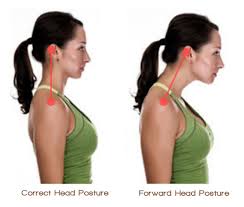
A straight cervical spine and forward head posture are also not exactly the same thing.
Forward head posture describes the position of the head relative to the trunk rather than simply the shape of the cervical spine on an X-ray.
Research into posture and neck pain is more nuanced.
Some systematic reviews have found differences in certain measurements of head posture between adults with and without neck pain. However, these studies primarily demonstrate associations.
That is different from proving:
Poor posture → structural change → neck pain.
Someone experiencing neck pain may change the way they hold their head because their neck hurts. People can also adopt different postures depending on their work, activity, fatigue and environment.
Posture may therefore be one contributing factor for some people rather than a single structural explanation for neck pain.
Does Age Change Your Cervical Curve?
The spine naturally changes throughout life.
The discs, vertebral joints and surrounding tissues gradually undergo age-related changes. These changes can influence the appearance and alignment of the cervical spine.
Importantly, structural changes on imaging become increasingly common as we get older — including in people who don’t experience pain.
This is one reason an X-ray should always be interpreted alongside your symptoms and clinical examination rather than being treated as an explanation for pain on its own.
Can Chiropractic Restore the Curve in Your Neck?
This is another area where it’s worth being cautious about claims.
You may see treatment programs promising to “restore your cervical curve” or correct your neck back towards an ideal alignment.
There are studies investigating whether particular rehabilitation approaches can alter radiographic cervical measurements. However, changing an X-ray measurement and successfully treating someone’s pain are not necessarily the same thing.
More importantly, if reduced cervical lordosis isn’t reliably associated with neck pain in the first place, achieving a particular curve shouldn’t automatically be considered necessary for recovery.
For someone with ordinary mechanical or non-specific neck pain, I wouldn’t make treatment success dependent on creating a particular X-ray appearance.
The more useful questions are:
Is your pain improving?
Are you moving better?
Can you work, exercise and perform normal activities more comfortably?
Are you becoming less reliant on treatment rather than more reliant on it?
These are generally far more meaningful measures of progress than whether your neck matches an “ideal” curve on an X-ray.
So What Is Actually Causing Your Neck Pain?
Most neck pain is non-specific, meaning there isn’t one identifiable structure or abnormality responsible for all of your symptoms.
The neck is an integrated system involving joints, muscles, fascia, nerves and other tissues.
For example, someone may have a combination of:
-
chronically tight or sensitive neck muscles
-
painful or stiff cervical joints
-
irritation around the base of the skull
-
reduced tolerance to prolonged sitting or particular activities
-
reduced muscular endurance
-
stress and poor sleep
-
previous injury
-
increased sensitivity of the nervous system
Two people can therefore have almost identical-looking cervical X-rays while experiencing completely different symptoms.
This is why I prefer to treat the person rather than the X-ray.
Do You Need an X-Ray for Neck Pain?
Usually, an X-ray isn’t required simply because you have uncomplicated neck pain.
Imaging can be extremely useful when there is a genuine clinical indication — particularly following significant trauma or when your history and examination suggest fracture, serious pathology or another condition requiring further investigation.
But routinely taking X-rays purely to identify small changes in spinal alignment is different.
An X-ray finding such as a straight neck should also be explained in context. Being shown an image and told that your spine is “out of alignment”, “degenerating” or needs months of corrective treatment can make a relatively common finding sound far more threatening than it necessarily is.
Should You Try to Fix a Straight Neck?
If you have no symptoms, finding that your neck is relatively straight isn’t necessarily something that needs to be treated.
If you do have neck pain, treatment should focus primarily on the factors that appear relevant to your individual presentation rather than trying to force your spine towards a predetermined shape.
Depending on the person, this may include:
-
addressing painful or restricted cervical joints
-
treating associated muscular tension
-
improving comfortable neck movement
-
gradually increasing strength and muscular endurance
-
modifying aggravating activities where appropriate
-
exercise and self-management
-
education and reassurance
The goal isn’t to create a perfect-looking spine.
The goal is to have a neck that feels good, moves well and allows you to do the things you want to do.
The Bottom Line: Is a Straight Neck Bad?
Having a straight neck or reduced cervical lordosis doesn’t automatically mean that something is wrong with your neck.
There is considerable variation in cervical curvature among healthy people, and research has found no consistent relationship between the degree of cervical lordosis and whether someone experiences neck pain.
Posture and spinal mechanics can still influence symptoms in some individuals, but they are pieces of a much larger puzzle — not something that can usually be reduced to a single line drawn on an X-ray.
If you’ve been told your neck pain is caused by a straightened cervical curve, the more important question is:
What findings from your history and examination actually explain your symptoms, and what can we do to help you feel and function better?
At Sydney Chiropractic & Massage, my approach to neck pain combines assessment of the cervical joints, muscles and surrounding tissues rather than basing treatment around achieving a particular spinal alignment.
The aim is simple: get meaningful improvement as efficiently as possible and give you strategies to help manage your neck outside the clinic.
References
Guo GM, Li J, Diao QX, et al. Cervical lordosis in asymptomatic individuals: a meta-analysis. Journal of Orthopaedic Surgery and Research. 2018;13:147.
Mahmoud NF, Hassan KA, Abdelmajeed SF, Moustafa IM, Silva AG. The Relationship Between Forward Head Posture and Neck Pain: a Systematic Review and Meta-Analysis. Current Reviews in Musculoskeletal Medicine. 2019.
Annetts S, Coales P, Colville R, et al. A pilot investigation into the effects of different office chairs on spinal angles. European Spine Journal.